Amila Ranaweera
CO-FOUNDERWhere Digital Meets Purpose




We’ll Guide you to Ideas that Match Your Vision.




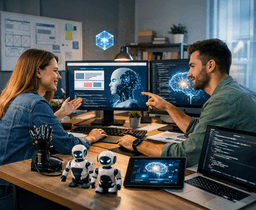
Artificial Intelligence has moved from being a futuristic concept to becoming one of the most influential forces shaping modern design. What was once a field driven purely by human intuition, aesthetics, and craftsmanship is now evolving into a powerful collaboration between human creativity and machine intelligence.
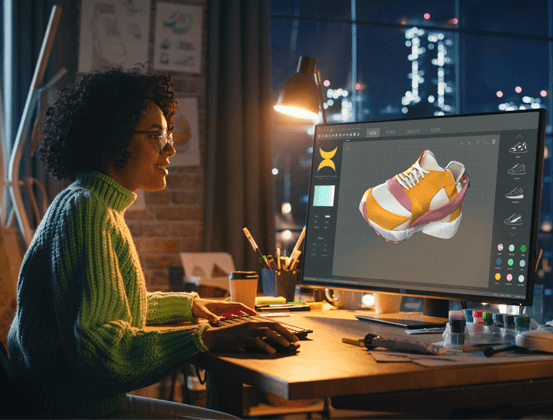
Designers no longer start from a blank canvas. AI tools can now generate layouts, colour palettes, typography suggestions, realistic images, 3D models, animations, analyse user behaviour, and automate repetitive tasks such as resizing, formatting, and asset cleanup. This allows designers to focus more on creativity, storytelling, and strategy while AI handles the repetitive work.
Artificial Intelligence is changing the design workflow. Designers can explore dozens of creative concepts in seconds, generate multiple visual variations, and transform simple text prompts into complete layouts, illustrations, concept art, and storyboards. Rather than replacing creativity, AI accelerates experimentation and dramatically reduces production time.
The fear that AI will replace designers is fading. Instead, AI has become a creative partner that enhances imagination and productivity. Designers continue to provide emotion, cultural understanding, context, taste, and ethical judgement, while AI contributes speed, precision, pattern recognition, data-driven insights, and the ability to generate countless visual variations.
"AI won't replace humans, but humans who use AI will replace those who don't."
Sam Altman, CEO of OpenAI
With great power comes great responsibility. As Artificial Intelligence becomes more deeply integrated into creative workflows, designers and developers must also consider the ethical implications of using AI-generated content. Ethical design is no longer optional—it is becoming one of the most valuable skills for the next generation of creators.
Responsible AI design requires balancing innovation with transparency, fairness, and trust. Every designer should understand how AI influences the content they create and the experiences they deliver.
Some of the most important ethical challenges include:
Generative AI tools such as image generators, code assistants, and intelligent layout engines are redefining creative workflows. Designers can now generate dozens of concepts in seconds, experiment with multiple visual directions, and rapidly transform ideas into polished digital experiences.
The next era of design will be driven by real-time collaboration between humans and AI. Smarter design systems, AI-powered accessibility, and seamless digital experiences will become the new standard. Designers who embrace AI will not only stay relevant—they will lead the future of creativity by combining human imagination with machine intelligence.